
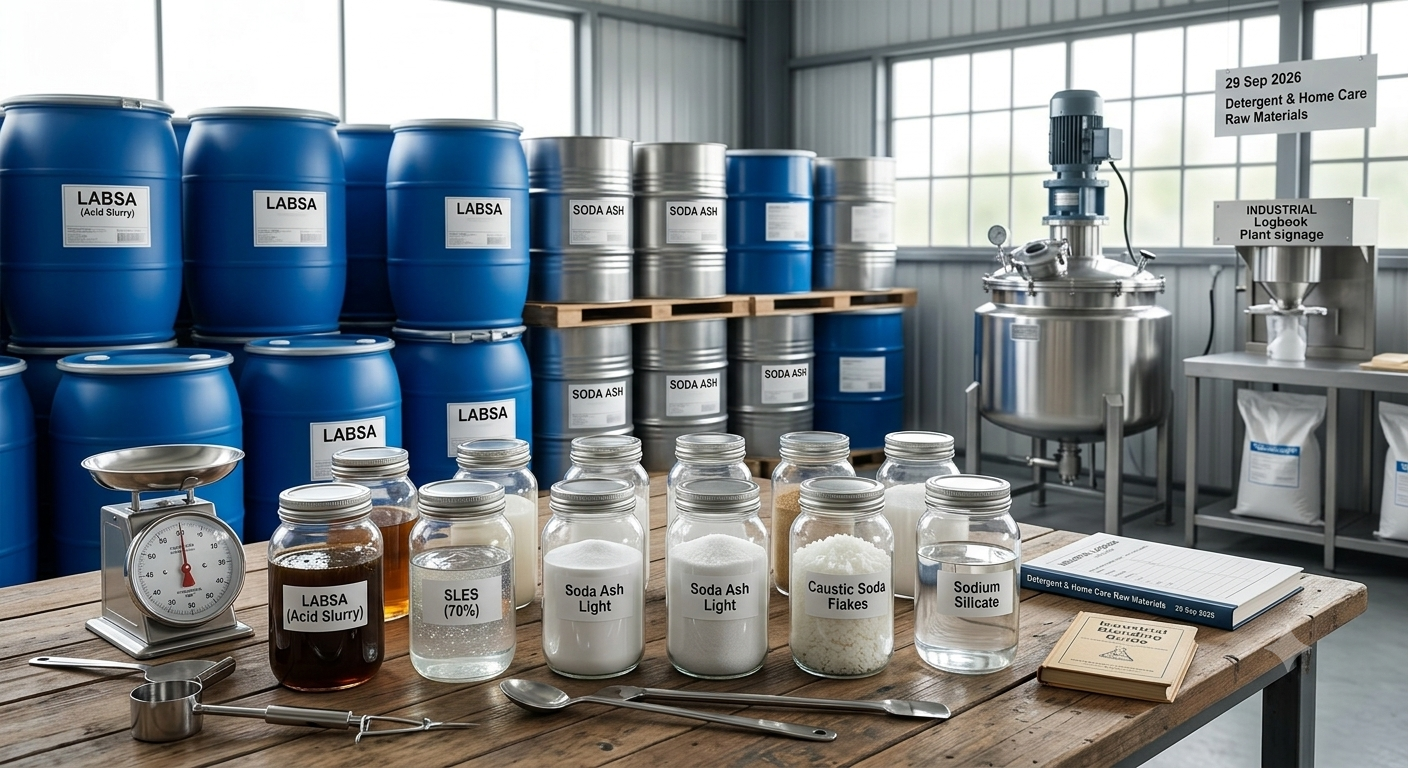
Starting or scaling a commercial cleaning product business requires balancing cleaning power, shelf stability, and raw material cost. Whether you run an independent unit, an MSME factory, or a contract blending setup in Tamil Nadu, commercial success depends on sourcing standard commercial grades with reliable active matter.
Velonex Chemicals distributes wholesale industrial cleaning chemicals from Redhills, Chennai, supplying manufacturing units across the state. This complete guide outlines the primary industrial chemicals used across commercial laundry powders, heavy-duty liquid detergents, and dishwash gels.
The Four Functional Groups of Detergent Formulation
Every commercial cleaning formula, whether solid powder or liquid concentrate, balances four primary chemical classes:
- Surfactants: The primary surface-active agents that break surface tension, wet textiles, emulsify grease, and suspend dirt.
- Builders and Alkalis: Compounds that neutralize acid soils, soften water by capturing calcium and magnesium ions, and maintain an alkaline pH where surfactants clean best.
- Fillers and Processing Aids: Bulking agents that standardize packaging density, keep powders free-flowing, or regulate viscosity in liquid systems.
- Performance Additives: Specialized ingredients like enzymes, optical brighteners, preservatives, and fragrances added in small percentages to improve visual appeal, wash freshness, and targeted stain removal.
Surfactants: LABSA, SLES, and Secondary Actives
Surfactants do the heavy lifting of soil removal.
Linear Alkyl Benzene Sulphonic Acid (LABSA / Acid Slurry)
LABSA serves as the main workhorse anionic surfactant for laundry powders, low-cost liquid detergents, and cleaning pastes. It appears as a dark brown viscous liquid and provides heavy-duty detergency, dirt lifting, and rich foaming. Commercial plants use either 90% or 96% active matter grades. Because LABSA is an organic acid, formulators must neutralize it with an alkaline builder like caustic soda or soda ash to convert it into active sodium alkyl benzene sulphonate in the mix.
To source high-purity stock for commercial production, view the technical specifications for acid slurry.
Sodium Lauryl Ether Sulphate (SLES)
SLES (typically 70% active paste) is a milder anionic surfactant known for fast wetting, high foaming, and grease cutting. Because it produces crystal-clear formulations and remains gentle on human skin, it serves as the primary foaming surfactant in manual dishwash liquids, car shampoos, and premium laundry liquids.
Secondary Surfactants
Commercial producers blend LABSA and SLES with secondary foam boosters and stabilizers:
- Coco Amidopropyl Betaine (CAPB): An amphoteric surfactant used to build viscosity, reduce irritation, and produce creamy foam in liquid dishwashers.
- Coco Diethanolamide (CDEA): A non-ionic foam booster and viscosity modifier that stabilizes bubble height in hand-wash formulas.
- Alcohol Ethoxylates (Non-ionic Surfactants): Low-foaming emulsifiers that target oily soils, useful in automatic front-load machine liquids.
Alkalis and Builders: Soda Ash, Caustic Soda, and Sodium Silicate
Builders enhance surfactant efficiency by adjusting water chemistry and breaking down acidic grime.
Soda Ash (Sodium Carbonate)
Soda ash provides the alkaline reserve needed to saponify greasy soils and precipitates hard water calcium ions. It serves two distinct roles:
- Light Soda Ash: Lower bulk density, preferred in laundry powder batches because it absorbs liquid acid slurry readily and prevents clumping.
- Dense Soda Ash: Heavier granular structure used in concentrated powders or industrial floor wash blocks where dense volume matters.
Check batch availability and purity standards for wholesale soda ash.
Caustic Soda (Sodium Hydroxide)
Caustic soda is an aggressive alkali used to saponify organic fats and neutralize LABSA into high-foaming cleaning pastes or liquid detergent bases:
- Caustic Soda Flakes (98% to 99.5%): Solid white dry flakes that dissolve in water to make stock lye.
- Caustic Soda Lye (48% to 50%): Ready-to-blend liquid solution favored by industrial plants running continuous automated tanks to avoid heat spikes from dissolving flakes.
Order bulk commercial supplies via the caustic soda flakes product page.
Sodium Silicate
Available in solid glassy lump form or clear alkaline liquids, sodium silicate serves multiple structural roles. In washing powders, it acts as a binder, prevents fine dust from separating, provides crisp bead structure, and protects washing machine metal surfaces from corrosion. In liquid formulations, specialty silicates offer alkaline cleaning reserve.
Note: For specialized formulations requiring anti-microbial or analytical preservative properties, industrial units also review sodium salicylate.
Fillers and Processing Aids
Fillers lower the cost per kilogram while ensuring correct product dispensing:
- Glauber’s Salt (Sodium Sulphate): The standard inert filler in laundry powders. It adds free-flowing weight, helps powders dissolve rapidly in cold wash water, and prevents moisture caking during warehouse storage.
- Industrial Salt (Sodium Chloride): The main cost-effective viscosity builder used in SLES-based dishwash liquids and floor cleaners. When added carefully to anionic systems, it thickens the blend into a rich gel.
- Citric Acid: A weak organic acid used to buffer liquid batches to a stable pH (8.0 to 9.0 for fabric care, 6.0 to 7.0 for dishwash) and sequester iron in wash water.
Performance Additives
- Optical Brighteners (OBAs): Fluorescent stilbene derivatives (such as CBS-X) that absorb ultraviolet light and re-emit it in the blue spectrum, counteracting fabric yellowing to make whites look vibrant.
- Enzyme Blends: Protease, amylase, and lipase enzymes that break down specific protein, starch, and oil stains at warm or ambient tap temperatures.
- Wash Fragrance: Encapsulated or oil-based perfumes designed to withstand detergent alkalinity and leave a fresh scent on dried laundry.
- Colorants: Water-soluble dyes (Acid Blue, Tartrazine Yellow, Fluorescent Green) and speckles that identify product variants.
- Preservatives: Biocides like Methylchloroisothiazolinone/Methylisothiazolinone (CIT/MIT) or formal release agents that stop bacterial spoilage in water-based liquid detergents.
Raw Material Map by Product Type
| Product Type | Primary Surfactants | Essential Builders and Alkalis | Common Fillers and Thickeners | Key Performance Additives |
| Detergent Powder | LABSA (90% or 96%) | Soda Ash (Light), Sodium Silicate, STPP / Zeolite | Sodium Sulphate (Glauber’s Salt), Dolomite | Optical Brightener (CBS-X), Blue Speckles, Perfume |
| Liquid Detergent | SLES 70%, LABSA (Neutralized) | Caustic Lye (for neutralization), Citric Acid (pH trim) | Industrial Salt, Water, Cellulosic Thickeners | Citric Acid, CIT/MIT Preservative, Enzyme Blend, Fabric Perfume |
| Dishwash Liquid | SLES 70%, CAPB, CDEA | Caustic Soda (trace pH balance) | Sodium Chloride (Viscosity builder), Water | Lemon Fragrance, Food-grade Green/Yellow Dye, Antibacterial Agent |
| Surface Cleaner | Low-active SLES, Alcohol Ethoxylates | Pine Oil / IPA emulsifier base | Softened Process Water | Pine/Citrus Fragrance, Benzalkonium Chloride (BKC), Water Soluble Dye |
Illustrative Starter Formulations
These sample formulations represent baseline starting points for bench trials. Final ingredient proportions should be adjusted based on water hardness, local cost targets, and pilot wash tests.
100 kg Laundry Detergent Powder Starter Batch
- Light Soda Ash: 28 kg
- LABSA (90%): 14 kg
- Sodium Silicate (Liquid): 5 kg
- Sodium Sulphate: 51.5 kg
- Optical Brightener: 0.2 kg
- Colored Speckles: 1.0 kg
- Encapsulated Laundry Perfume: 0.3 kg
Blending process: Charge soda ash into the ribbon blender. Slowly spray or pour the LABSA into the moving ash to allow full neutralization without forming wet gummy lumps. Add sodium silicate to build granule strength. Blend in the sodium sulphate bulking filler. Once cooled and free-flowing, sift the mix and blend in brighteners, speckles, and fragrance before bagging.
100 kg Heavy-Duty Liquid Detergent Starter Batch
- Treated Soft Water: 68.5 kg
- LABSA (90%): 8 kg
- Caustic Soda Flakes (pre-diluted in water): ~1.1 kg (adjust to pH 8.0)
- SLES (70%): 14 kg
- Citric Acid: 0.4 kg
- Industrial Salt (NaCl): 1.5 to 2.5 kg (adjust for desired viscosity)
- CIT/MIT Preservative: 0.1 kg
- Dye and Fragrance: 0.4 kg
Blending process: Charge water into the jacketed mixing tank. Slowly dissolve SLES paste completely using moderate propeller agitation to avoid whipping excess foam. Add neutralized LABSA solution. Check and adjust batch pH to 8.0 to 8.5 with caustic lye or citric acid. Add biocide and fragrance. Slowly add salt solution while stirring until the batch achieves the target viscosity.
How to Choose an Industrial Raw Material Supplier
Selecting raw chemical supply partners requires looking beyond basic price quotations:
- Certificate of Analysis (COA) per Consignment: Chemical activity must remain consistent. A variation between 88% and 92% active matter in LABSA shifts your neutralization ratios, throwing off batch pH and causing cloudiness in liquids or caking in powders.
- Minimum Order Quantities (MOQ): A responsive distributor supports both small scale pallet orders for batch trials and full truckloads as your capacity scales.
- Local Delivery and Stock Continuity: Industrial detergents turn fast with slim working capital buffers. Sourcing from stocking distributors in established chemical hubs like Chennai ensures fast dispatch across Tamil Nadu, eliminating costly factory downtime.
- Packaging Integrity: Moisture barrier liners on soda ash bags and secure HDPE carboys or barrels for acid slurry prevent moisture clumping, chemical degradation, and plant handling leaks.
Safe Handling of LABSA and Caustic Soda in the Plant
Detergent manufacturing processes rely on strong, concentrated corrosive chemicals. Maintain the following safety practices inside the plant:
- Exothermic Heat Management: Dissolving caustic soda flakes in water creates strong exothermic reactions that can boil water instantly. Always add caustic flakes slowly into cold water while stirring continuously; never add water directly into caustic flakes.
- Neutralization Control: Adding LABSA directly into high-strength caustic produces intense heat. Ensure mechanical cooling or slow metering pumps are used to maintain safe batch temperatures below 60 degrees Celsius.
- Mandatory PPE: Operators handling unneutralized acid slurry or dry caustic flakes must wear chemical splash goggles, neoprene protective gloves, rubber aprons, and gumboots. Maintain an emergency eye-wash and wash-down shower within ten paces of the chemical handling tanks.
Frequently Asked Questions
1. What are the raw materials of detergent powder?
Detergent powder uses linear alkyl benzene sulphonic acid (LABSA) as the primary surfactant, soda ash and sodium silicate as builders and alkalis, sodium sulphate as a free-flowing filler, and performance additives including optical brighteners, colored speckles, and fragrance.
2. What chemicals are used in liquid detergent?
Liquid detergents rely on a clear surfactant base combining neutralized LABSA and sodium lauryl ether sulphate (SLES), supported by foam boosters like CAPB, citric acid for pH control, industrial salt or polymer thickeners for viscosity, and broad-spectrum preservatives to stop bacterial spoilage.
3. What is the main raw material of detergent?
The main cleaning active is an anionic surfactant, primarily LABSA (acid slurry). When neutralized with an alkali like soda ash or caustic soda, it forms the active detergent salt that dissolves oil, lowers water tension, and removes dirt.
4. Is soda ash used in detergent?
Yes. Soda ash (sodium carbonate) softens hard wash water, neutralizes acidic stains on fabrics, maintains an alkaline wash pH where surfactants perform best, and provides a porous dry base in powder manufacturing.
5. Where can I buy bulk detergent chemicals in Chennai?
You can source bulk commercial cleaning chemicals, including LABSA, soda ash, caustic soda, and processing builders, directly through Velonex Chemicals from our distribution hub in Redhills, Chennai, serving manufacturing units across Tamil Nadu.
Download the Free Detergent Raw Material Checklist
Planning a new production setup or reviewing raw material costs for your existing plant?
Connect with Velonex Chemicals on WhatsApp or submit your chemical requirement sheet to receive our comprehensive commercial raw material checklist, latest spot prices, and product Certificates of Analysis.
